Trolling lures and plugs
A hard body built to be pulled, not cast. Banana plugs, cut plugs and deep divers that dig.

What it is
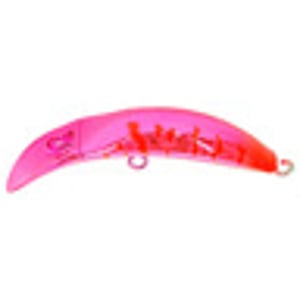
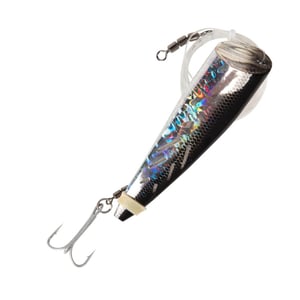
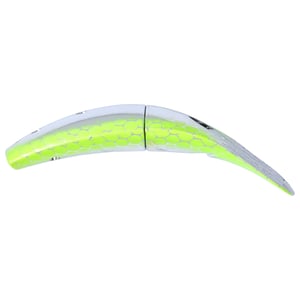
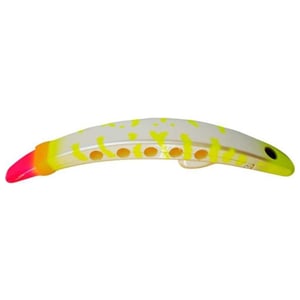
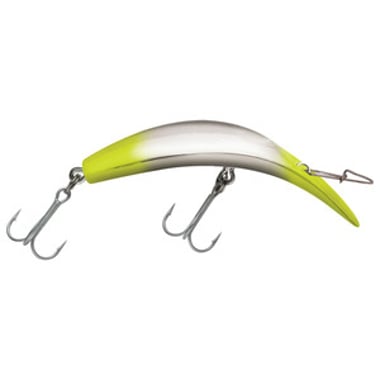
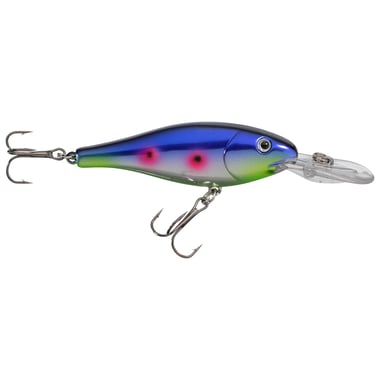
A hard bodied lure designed for a boat to supply the motion. Some, like a banana plug, have a broad wobble built into the body shape with no lip at all. Others carry a diving bill that pulls them down twenty feet or more on a flat line. Cut plugs are cut on an angle at the nose so they roll, which is a salmon and steelhead presentation with a following of its own.
When to throw one
Salmon and steelhead on a river or in the lake, walleye on a big flat, kingfish and wahoo offshore, and lake trout deep. Anywhere the fish are spread out and the answer is to cover water at a controlled depth rather than to make a hundred casts.
How to fish it
Depth control is the whole discipline. Line length, line diameter, trolling speed and any diving aid all change how deep the lure runs, and a lure at the wrong depth catches nothing no matter how good it looks. Run it beside the boat first and watch it. If the action looks wrong at the surface it is wrong down there too.
Gear that matters
Line counter reels exist for this and are worth it, because "let out about a hundred feet" is not repeatable and repeating what worked is the entire point. Rod holders and a moderate action rod let the fish load up rather than tearing off.
Never checking the lure beside the boat. Thirty seconds of watching it swim saves an hour of pulling a fouled bait.
Trolling lures and plugs by the numbers
- Families in the catalog
- 90
- Individual variants
- 842
- Brands represented
- 34
- Weight range
- 0.1 oz to 65 oz
- Length range
- 0.25 in to 48 in
- Most stocked color families
- Silver and Blue, Shad and Natural, White and Pearl
A family is a product line. A variant is one color and size of it, which is the level the app actually reasons about.
What the shelves carry
Shelf availability, not a recommendation. Which color is right depends on the day, and that is the part the app works out.
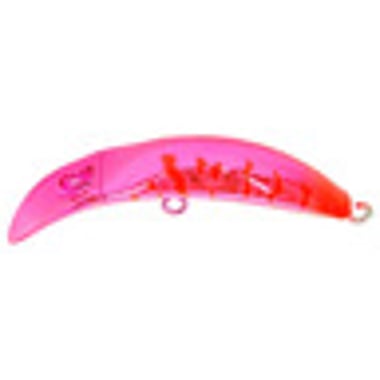
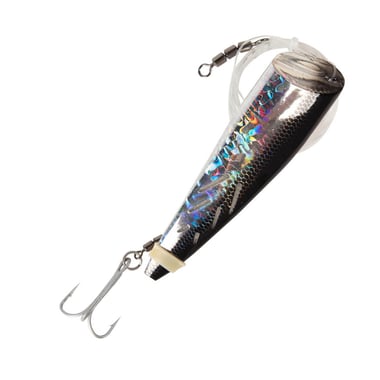
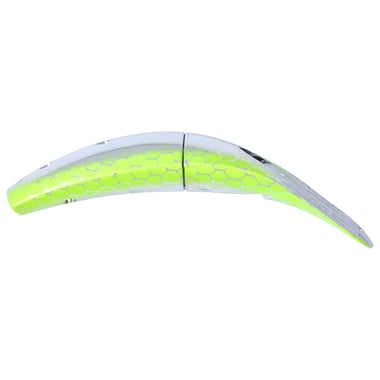
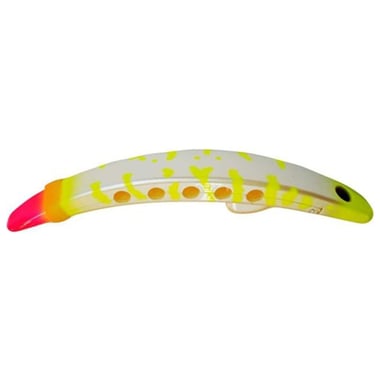
Trolling lures and plugs with the deepest color runs
The families carrying the most individual variants in the catalog. Breadth of stock, not a ranking of which one catches more fish.
What a web page cannot know
Everything above is true of trolling lures and plugs everywhere, in every month, for every angler. That is exactly the problem with it. Cobia answers the narrower question.
Those four lines need a location, a clock and your actual tackle box. No website has any of them.
Trolling lures and plugs questions people actually ask
A hard bodied lure designed for a boat to supply the motion. Some, like a banana plug, have a broad wobble built into the body shape with no lip at all. Others carry a diving bill that pulls them down twenty feet or more on a flat line. Cut plugs are cut on an angle at the nose so they roll, which is a salmon and steelhead presentation with a following of its own.
Salmon and steelhead on a river or in the lake, walleye on a big flat, kingfish and wahoo offshore, and lake trout deep. Anywhere the fish are spread out and the answer is to cover water at a controlled depth rather than to make a hundred casts.
Depth control is the whole discipline. Line length, line diameter, trolling speed and any diving aid all change how deep the lure runs, and a lure at the wrong depth catches nothing no matter how good it looks. Run it beside the boat first and watch it. If the action looks wrong at the surface it is wrong down there too.
Never checking the lure beside the boat. Thirty seconds of watching it swim saves an hour of pulling a fouled bait.
Know which trolling plug to tie on
Scan your receipts, build your box once, and Cobia ranks what you already own against the water in front of you.
Android coming soon
iPhone, iOS 17 or later. Setup takes about a minute.