Where they should be.
Right now.
Strike Zones shades the water where the odds are best this hour. It reads the structure, which way the tide is pushing across it, the wind, the depth, the light and what anglers have caught, and grades each zone hot, great, good or fair.
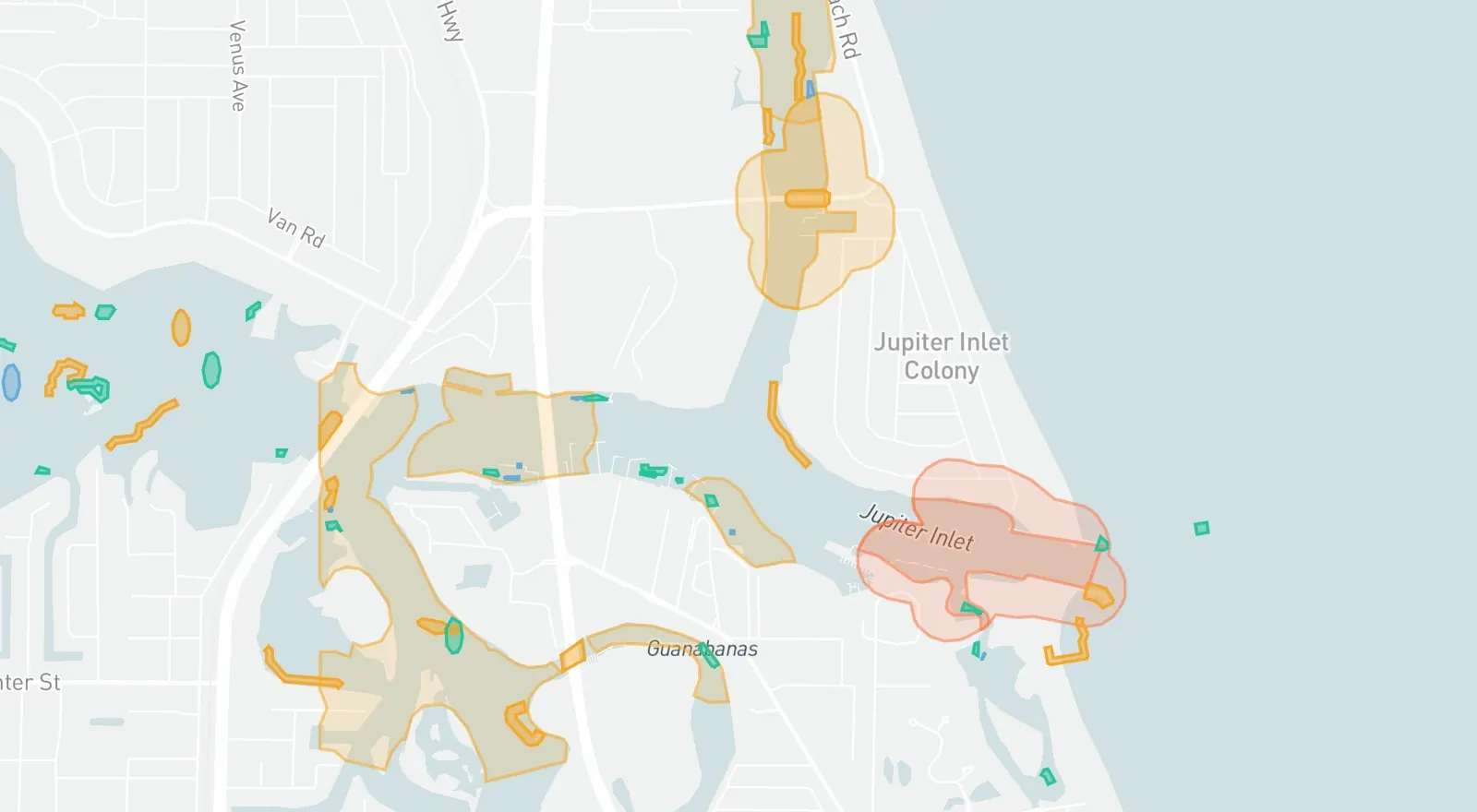
The map is from the app. The tier counts in the legend are an example.
Strike Zones is a free map layer in Cobia, the fishing app, that shows where fish are likely holding right now. It scores zones along real structure from the structure itself, how the tide is pushing across it, the wind, the depth, the light, the water and recent catches, rescores them every hour, and shades each one hot, great, good or fair. It's a model of the odds, not a fish finder.
Key facts
- Tiers
- Hot, great, good and fair, from orange to blue.
- Updated
- Every hour, with how long ago in the legend.
- What it reads
- Structure, current across it, depth, wind, light, water temperature, pressure, the moon and catches logged there.
- Tap a zone
- Its score out of 100, the top reasons and the species it suits.
- Where
- South Florida's inshore and nearshore water today.
- Price
- Free on iPhone and Android. No trial, no lock.
Every zone tells you why
Tap a shaded zone and it opens with its score, the three biggest reasons behind it and the fish it suits. The reasons are plain: the structure, the tide, the depth. Under the hood, seven things add up to the score.
- 1.Bridge Pilings nearby
- 2.9 structure types converging
- 3.Incoming Peak tide pushing bait across structure
Sample, from a real zone at the Jupiter Inlet bridges.
MORE OF WHAT A ZONE CAN SAY- Structure28
The best edge in the zone and how many kinds of structure meet there. Bridges, wrecks, jetties and drop-offs count most.
- Current across structure22
Whether the tide is pushing water across that structure right now, and how hard. Moderate flow scores best.
- Depth8
Five to fifteen feet scores best. A depth change across the zone adds to it.
- Wind7
Wind pushing bait toward the structure scores. Over 25 mph it counts for much less.
- Water, pressure, moon7
Water temperature in a comfortable range, a falling barometer and a major solunar window.
- Catches this week5
Catches logged inside the zone in the last week, so the map learns from what anglers land.
- Light3
Low light and cloud cover, when fish feed with less caution.
Points from the scoring model as it runs today.
The hot side flips with the tide
Fish hold on the down-current side of structure, where the water brings the bait to them. So when the tide turns, the best side of a jetty turns with it. Strike Zones knows which way the water is running at each zone and rescores every hour.
- Moving water scores. Slack tide drops the current part of the score to almost nothing.
- Deep water carries the current. A channel beside a flat gets more of the flow than the flat does.
Sample. The same inlet on each tide, drawn to show how the tiers move.
- Hot
The top 5 percent of zones in the region this hour, and only above a minimum score.
- Great
The top 20 percent, with strong structure and the water moving across it.
- Good
The top 60 percent. Solid structure with something happening.
- Fair
The rest. Worth a cast on the way past.
Graded against the day, not a fixed bar
Each hour the zones are ranked against each other, so the map always picks out the few best places instead of painting everything good. And because each tier also needs a minimum score, a dead slack-tide hour has no hot zones at all.
The legend stays pinned at the top of the map sheet with a count for each tier in view and how fresh the scores are. The ramp runs from blue for fair to orange for hot, so the best water reads at a glance.
A model of the odds, not a fish finder
Strike Zones doesn't see fish. A hot zone means the structure, the water and the history all favor it this hour. It sharpens where anglers log catches, because those catches feed back into the scores.
It's one switch in the map's layer sheet, free for everyone, and it covers South Florida today. Everywhere else the switch says Coming soon to this area.
The switch in South Florida, and on water it doesn't cover yet.
Questions about Strike Zones
What are Strike Zones?
A map layer in Cobia that shades the water where fish are likely holding right now. Each zone sits on real structure and is graded hot, great, good or fair from the conditions this hour.
How is a zone scored?
From seven things: the structure in the zone, how the tide is pushing across it, the depth, the wind, the water temperature with the pressure and the moon, catches logged there this week, and the light. Tap a zone to see its score and its top reasons.
How often do Strike Zones update?
Every hour. The legend shows how long ago the scores were updated.
Where do Strike Zones work?
South Florida's inshore and nearshore water today. On other water the switch reads Coming soon to this area.
Do Strike Zones cost anything?
No. Strike Zones is free in Cobia on iPhone and Android. There's no trial, nothing counts down and nothing is locked.
Is it a fish finder?
No. It's a model of where the odds are best, built from structure, conditions and catch history. It doesn't see fish.
Fish the odds,
this hour.
Download Cobia, open the Map tab and switch on Strike Zones.