Daily briefing
Anyone can look up a tide chart. The value is in what it means when you stack it against wind, pressure, water temperature, moon phase, and what has actually been caught near you this week. That stacking is the briefing.

The score shows its work
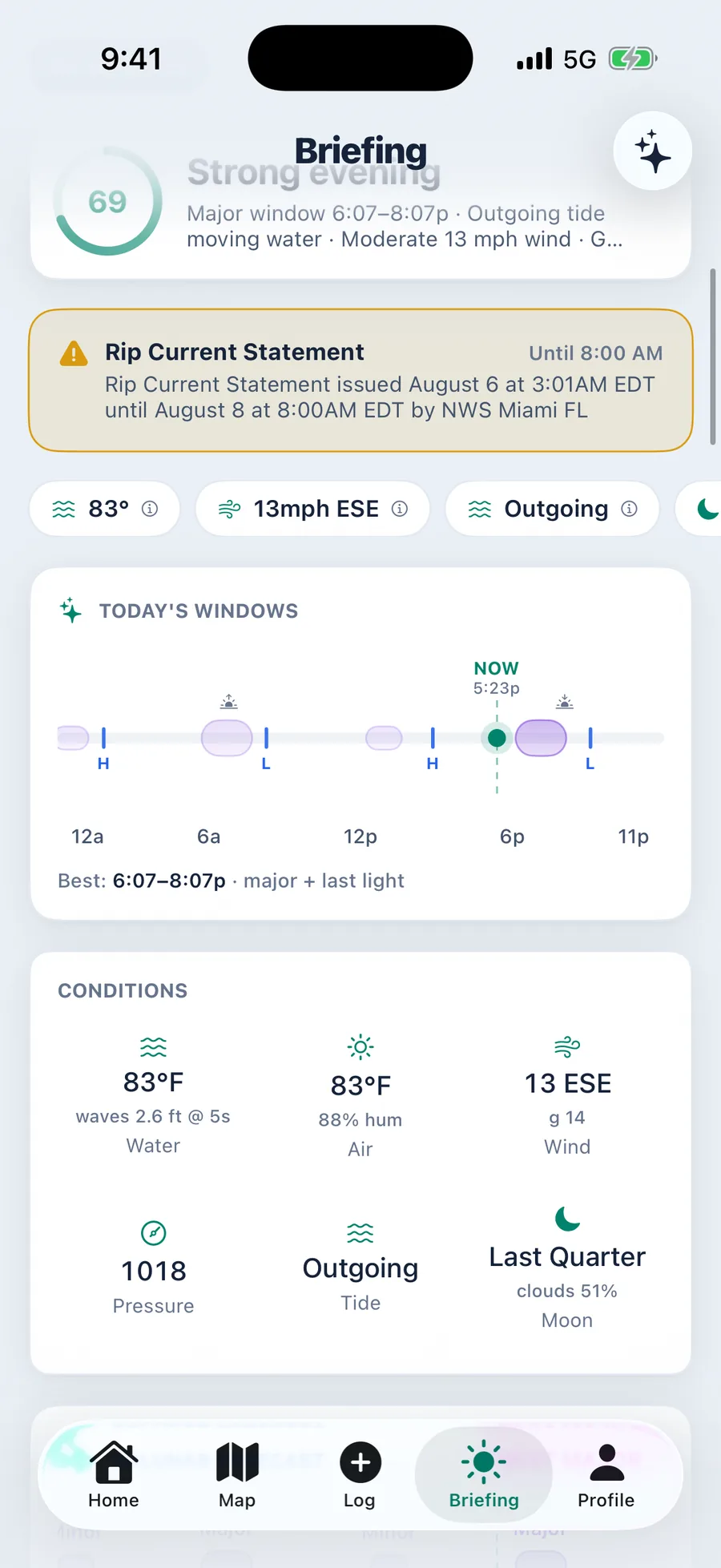
Every point traces back to a real input, and the inputs sit right under the number. A 69 is a major window from 6:07 to 8:07, an outgoing tide moving water, a moderate thirteen mile an hour wind and half cloud cover. If your gut disagrees, you can see exactly what you are disagreeing with.
- Score out of 100 with a plain language verdict like Prime evening or Slow midday
- The reasoning spelled out, for example incoming tide moving water plus a minor window at 7:57
- Live badge with the timestamp of the last data pull, so you know how fresh it is
- Seven day lookahead so you can pick the right day off work, not just the right hour
Six sections, top to bottom
The briefing is one scroll. Nothing is hidden behind a tab, because at 5am nobody goes looking.
Conditions grid
Water temperature with wave height and period. Air with humidity. Sustained wind with gusts and direction. Barometric pressure in millibars. Tide stage. Moon phase with cloud cover.
Today window timeline
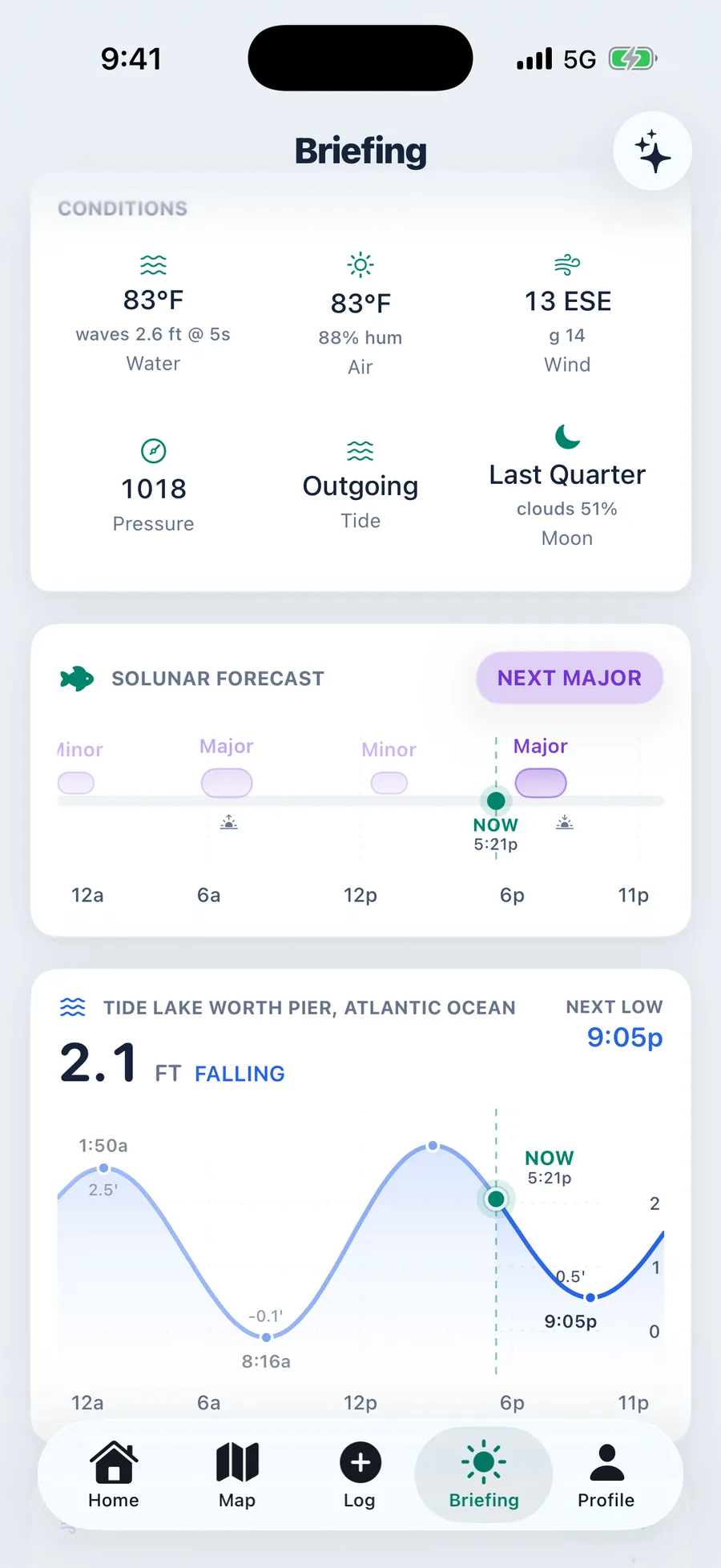
Solunar majors and minors plotted across the day with sunrise and sunset markers, tide highs and lows, and a live now line. The best hour is called out underneath in plain text.
Tide curve
The real curve from your nearest NOAA CO OPS station, named on the card, with all four turns and their times. Rising or falling is labeled, not inferred.
Ranked spots
A map of the water near you with candidate spots pinned and ranked. The top pick is highlighted, and distance from your selected area is shown so you can weigh the drive.
Water read
A written analysis naming the leading spot, its recent activity score, how many species have been proven there, whether a Slam is active, and the runner up worth considering.
From your tackle box
Ranked picks pulled from lures you actually own, matched to the target species and today pattern, with a note on what is worth adding to the box.
The briefing knows where you fish and how you get there
A kayak angler and a thirty four foot center console should not get the same recommendation. Cobia builds the read around your home water, your drive radius, whether you fish salt or fresh or both, and the species you actually chase.
- Home water and drive radius of fifteen, thirty, or sixty minutes
- Salt, fresh, or both, which changes the spot pool and the species logic
- Shore or boat, which changes what is reachable and worth suggesting
- Area switching so a trip to a new town gets a real briefing, not your home one
Where this data comes from
The briefing is a synthesis, and every input is traceable.
- NOAA CO OPS tide predictions and water level observations from the station nearest your area
- Marine and weather forecast feeds for wind, gusts, air temperature, humidity, cloud cover, and wave height and period
- USGS gauges and a 6,400 station water registry for inland water temperature and flow
- A solunar engine computing majors and minors from moon transit and rise and set times
- Catch history contributed by anglers, weighted for recency and proximity
About daily briefing
It regenerates through the night so it is waiting when you wake up, and the card carries a Live badge with the timestamp of the last refresh. You can also force a refresh from the AI analysis card at any time.
It is the weighted stack of today inputs expressed as one number out of a hundred, and the band it lands in is named in plain words next to it. The score is comparative rather than absolute. A 69 in July on the Treasure Coast and a 69 in January mean the day is good relative to what that water and that season can produce.
Yes. Switch the area from Current Area to any pin you set. The whole briefing recomputes against that location, including the tide station, the spots, and the regulations.
Tomorrow morning starts tonight
Set your home water, pick a drive radius, and wake up to a plan.
Android coming soon
iPhone, iOS 17 or later. Setup takes about a minute.