Built for people who actually fish
Cobia started because the tools were all wrong. Five apps open on the truck ride, none of them talking to each other, and still no answer to the only question that mattered, which was where to go.
Get more people outside, and give them a reason to come back
Every catch logged is a data point. Every angler engaged is a future advocate for the water they fish. The game layer is not a gimmick bolted on top, it is the engine that turns casual interest into the kind of participation that protects a fishery.
- Serious by default. Nothing is dumbed down. Wave period, gust spread, barometric trend, and depth bands are all there in full.
- Honest about proof. Verified catches and imported photos are labeled differently because they are different.
- Protective of your water. Spot privacy is a per catch decision with the protective option as the default.
- Open, on purpose. The synthesis gets better the more anglers use it, so locking people out makes it worse for everyone.
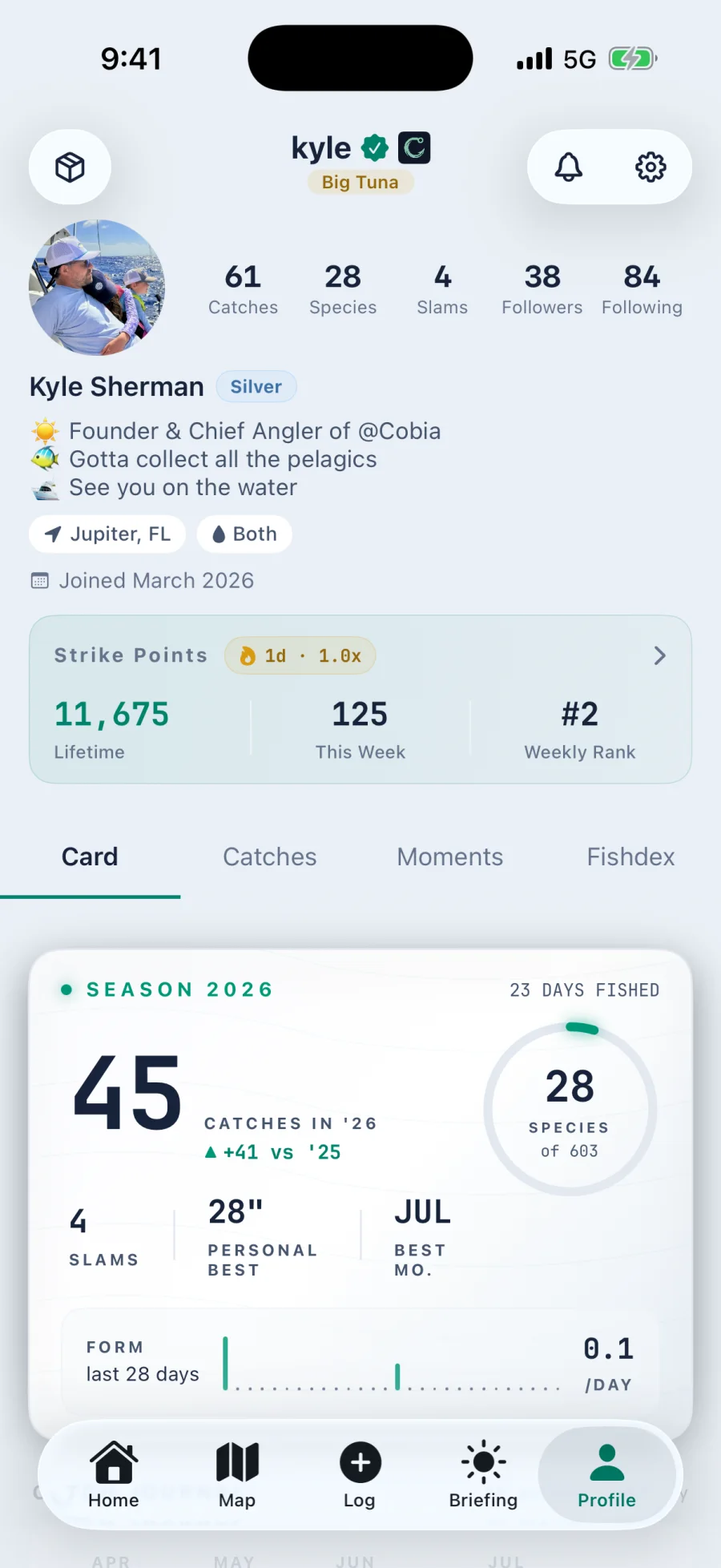
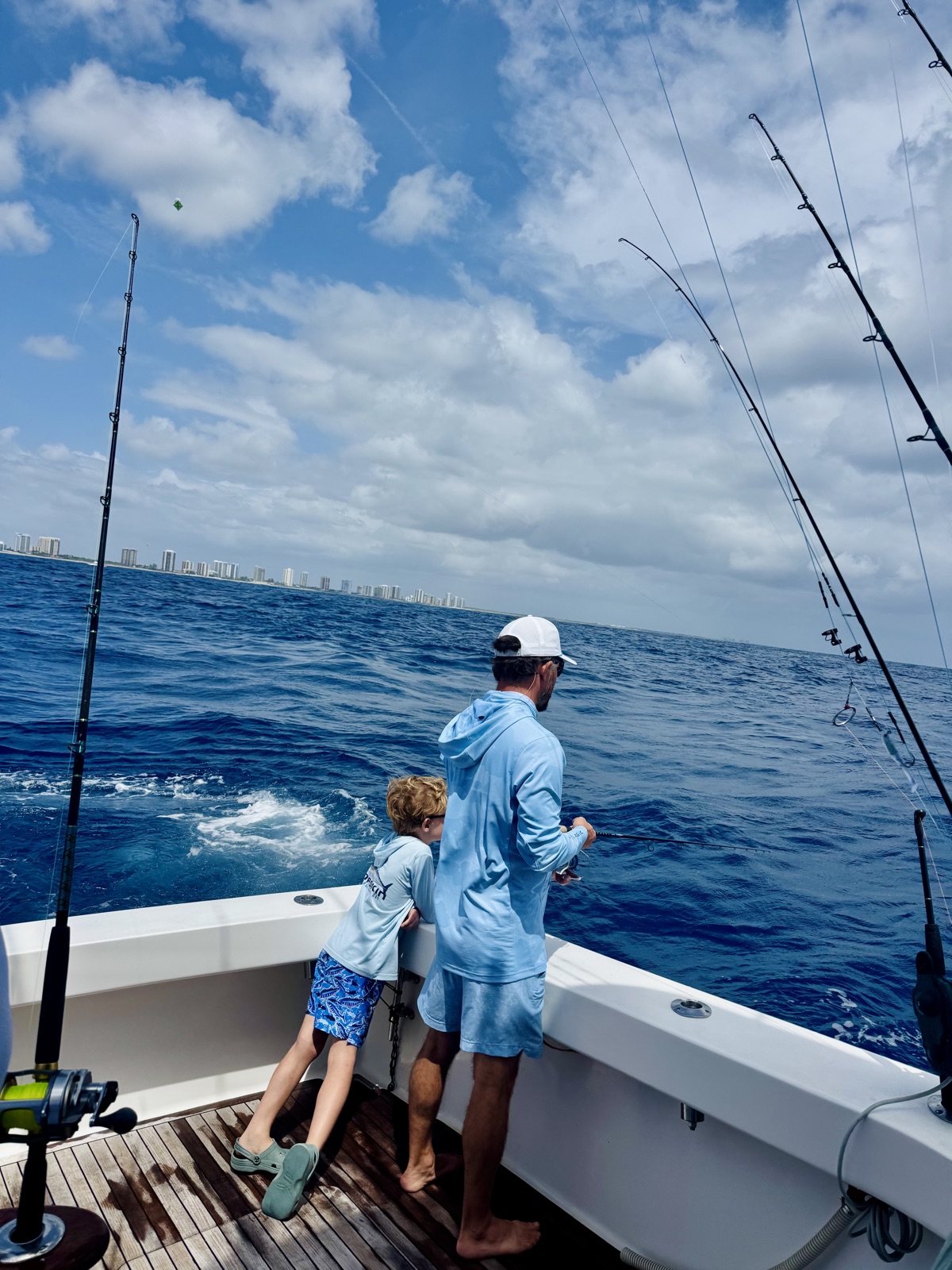
I didn’t set out to build just another fishing app
I’ve been fishing my whole life. My dad took me when I was a kid, and now I’m doing the same thing with my own kids. We live in South Florida and fish together constantly. Somewhere along the way I went from always loving fishing to being completely obsessed with it.
That’s really where Cobia came from. I kept thinking about how much better software could make fishing without getting in the way of the reason we all love it in the first place. More reasons to get on the water. More places worth exploring. More species to chase. More competition with friends and family. Better information when you’re trying to figure out where to fish and what to throw.
What started as something I wanted for myself and my family quickly became something I thought could be much bigger. Fishing is full of incredible knowledge, stories, places, and people, but the software around it has never really matched how great the sport itself is. I think there is an opportunity to build something genuinely new for anglers.
We’re still incredibly early, but I’m having more fun building Cobia than I’ve had building anything in a long time. My hope is simple. Make fishing more fun, help people spend more time on the water, and build something anglers are proud to be part of.
Cobia was built on a simple belief
The best things in life happen outside.
Fishing gets you off the screen and onto the water with people you care about. It turns an ordinary day into something you remember.
We built Cobia to make fishing more fun. To give you more reasons to explore new water, chase new species, compete with your friends, and stay out for one more cast.
What we believe
We believe in tight lines and big fish. In feeding your family something you caught yourself. In taking care of the oceans and waterways that make all of this possible.
Mostly, we believe people should spend more time outside and more time on the water.
So grab your rod and go fishing.
Tight lines,
Team Cobia
Four things that shaped the product
Data is not insight
Anyone can show you a tide chart. The work is in saying what it means when you stack it against wind, pressure, temperature, and what has actually been caught nearby this week.
Trust has to be structural
A leaderboard without verification rewards the person most willing to lie. So verification is built into capture rather than added as a moderation problem later.
Spots are sacred
Fishing has a social contract about location and every angler knows it. An app that violates it is an app that gets deleted, and rightly.
Fishing should be a game
Strava turned every road into a segment and made running social. Fishing has a bigger, older, more passionate community and nobody had done it properly.
South Florida first, on purpose
Cobia was built and tested on the Jupiter, Juno, and Palm Beach corridor. Inlets, piers, bridges, the Loxahatchee, the Intracoastal, and the reef line offshore. That was deliberate. Building for one stretch of water you know intimately produces a much better product than building for everywhere and being useful nowhere.
The data foundation was always national. NOAA tide stations, USGS gauges, federal bathymetry, and a species catalog covering 605 fish. The app works anywhere those sources reach, and the intelligence gets sharper on any water where anglers are logging catches.
We work with real shops in real places rather than a scraped directory. Captain Kenny in Jupiter is a partner, not a listing. That is the model we want to grow.
What is next
An Android build is in development and coming to Google Play. Beyond that the roadmap is deeper structure mapping, broader habitat coverage outside Florida, and a tournament platform for organizers who need catches that can actually be verified.
Tomorrow morning starts tonight
Set your home water, pick a drive radius, and wake up to a plan.
 Android coming soon
iPhone, iOS 17 or later. Setup takes about a minute.