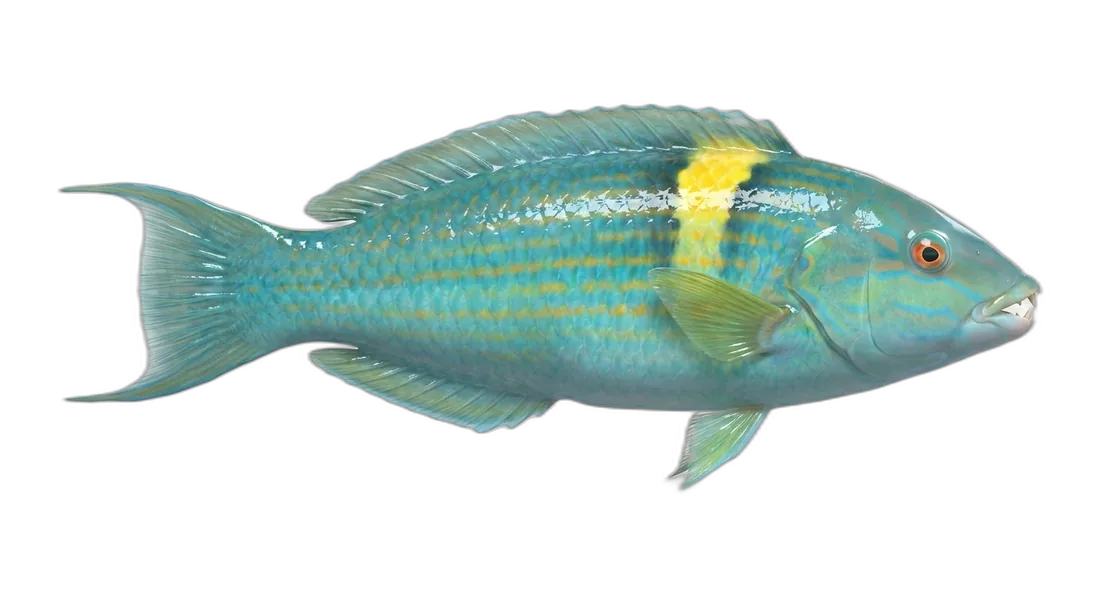
Puddingwife Wrasse
Halichoeres radiatus
The puddingwife is a colorful wrasse found in the western Atlantic, displaying vibrant blue-green and yellow markings that change dramatically between juvenile and adult phases. It is a robust wrasse that can reach considerable size compared to other wrasse species.

Puddingwife Wrasse at a glance
- Scientific name
- Halichoeres radiatus
- Typical size
- 10-20 inches, 1-4 lbs
- Water
- Saltwater
- Habitat
- Reef
- Rarity in the Fishdex™
- Uncommon
Habitat
Puddingwife inhabit coral reefs, rocky bottoms, and seagrass beds from shallow inshore waters to depths of around 55 meters. They are commonly found in South Florida, the Florida Keys, and throughout the Caribbean. While not a targeted gamefish, they are occasionally caught incidentally by anglers fishing reefs with small baits and jigs.
Catch one and it is yours
Log a puddingwife wrasse through the Cobia Camera and this entry fills in with your photo, your personal best, and the exact conditions on the day. The app also carries the slot and season rules for wherever you are standing.
How the Fishdex™ worksPuddingwife Wrasse questions people ask
Puddingwife Wrasse is Halichoeres radiatus.
A typical puddingwife wrasse runs 10-20 inches, 1-4 lbs. Cobia records the length and weight of every puddingwife wrasse you log and keeps your personal best on its Fishdex entry.
Puddingwife inhabit coral reefs, rocky bottoms, and seagrass beds from shallow inshore waters to depths of around 55 meters. They are commonly found in South Florida, the Florida Keys, and throughout the Caribbean. While not a targeted gamefish, they are occasionally caught incidentally by anglers fishing reefs with small baits and jigs. It is a salt water species, filed under reef in the Fishdex.
Yes. Log one through the Cobia Camera and this entry fills in with your own photo, your personal best, and the conditions on the day you caught it. The app also carries the slot limits and season dates for wherever you are standing. It is free.
Tomorrow morning starts tonight
Set your home water, pick a drive radius, and wake up to a plan.
Android coming soon
iPhone, iOS 17 or later. Setup takes about a minute.