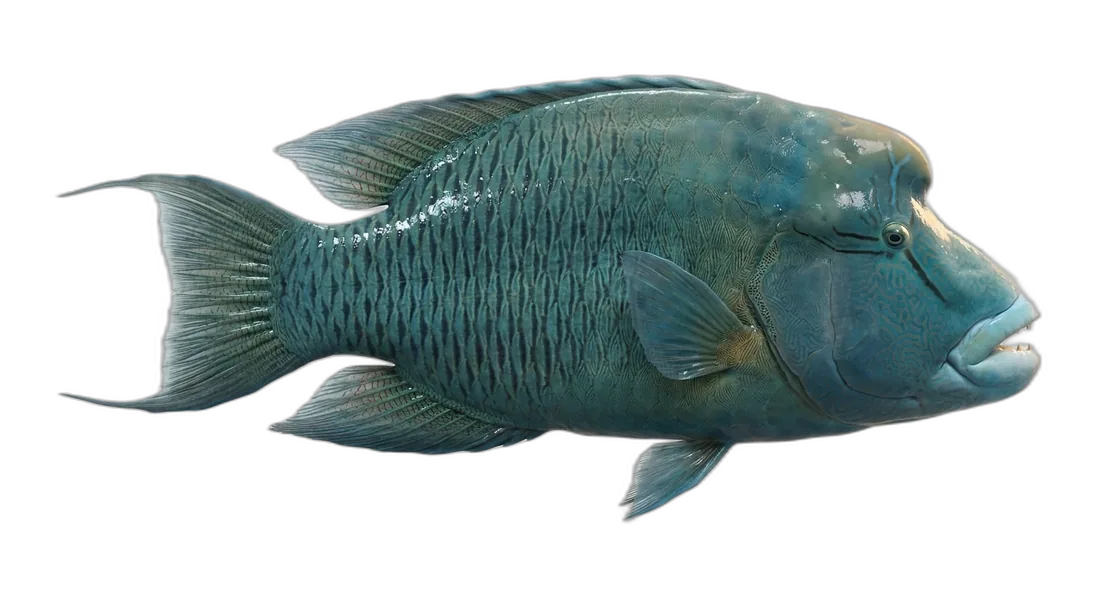
Humphead Wrasse
Cheilinus undulatus
The humphead wrasse is the largest member of the wrasse family, recognized by its distinctive hump on the forehead and thick, fleshy lips. It is a long-lived species that can reach over 6 feet in length and is listed as Endangered on the IUCN Red List.

Humphead Wrasse at a glance
- Scientific name
- Cheilinus undulatus
- Typical size
- 24-72 inches, 20-400 lbs
- Water
- Saltwater
- Habitat
- Reef
- Rarity in the Fishdex™
- Mythic
Habitat
Found throughout the Indo-Pacific region on coral reefs, from the Red Sea to the Pacific Ocean, typically at depths of 1 to 100 meters. They are associated with steep coral reef slopes and lagoons. Not a target species for sport fishing and is heavily protected due to its endangered status.
Catch one and it is yours
Log a humphead wrasse through the Cobia Camera and this entry fills in with your photo, your personal best, and the exact conditions on the day. The app also carries the slot and season rules for wherever you are standing.
How the Fishdex™ worksHumphead Wrasse questions people ask
Humphead Wrasse is Cheilinus undulatus.
A typical humphead wrasse runs 24-72 inches, 20-400 lbs. Cobia records the length and weight of every humphead wrasse you log and keeps your personal best on its Fishdex entry.
Found throughout the Indo-Pacific region on coral reefs, from the Red Sea to the Pacific Ocean, typically at depths of 1 to 100 meters. They are associated with steep coral reef slopes and lagoons. Not a target species for sport fishing and is heavily protected due to its endangered status. It is a salt water species, filed under reef in the Fishdex.
Yes. Log one through the Cobia Camera and this entry fills in with your own photo, your personal best, and the conditions on the day you caught it. The app also carries the slot limits and season dates for wherever you are standing. It is free.
Tomorrow morning starts tonight
Set your home water, pick a drive radius, and wake up to a plan.
Android coming soon
iPhone, iOS 17 or later. Setup takes about a minute.