Crankbaits
A lip, a wobble and a diving curve. Built to hunt a specific depth and hit things.

What it is
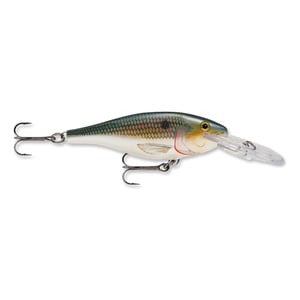
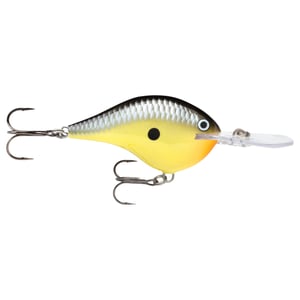
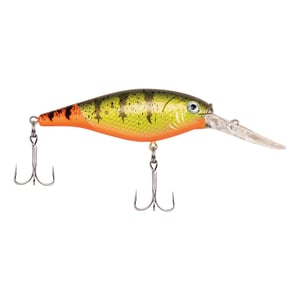
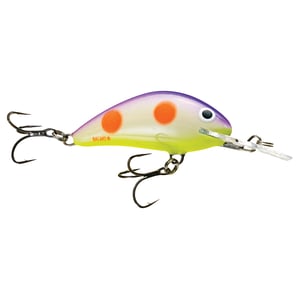
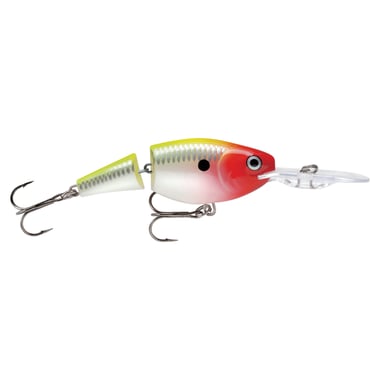
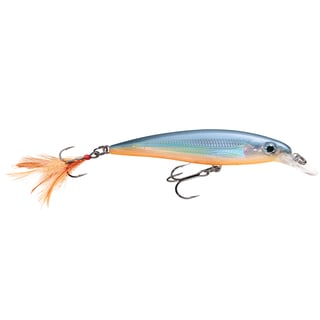
A hard body with a plastic or metal bill on the nose. The bill drives the bait down and sets the wobble. Square bills deflect off wood and rock in shallow water. Medium divers work the two to eight foot range. Deep divers run ten to twenty and beyond with a long bill and a long cast. Lipless models are a separate thing entirely and have their own page.
When to throw one
Prespawn and fall are the big windows in freshwater, when fish set up on hard structure and are willing to chase. Inshore, a shallow crankbait bounced along an oyster bar does something almost nothing else does, which is to make an ugly noise against hard structure at exactly the right depth.
How to fish it
The bites come from deflection. Pick a bait that runs slightly deeper than the cover you are fishing so it is always in contact, then reel steadily and let it bang. When it hits something, keep reeling. Do not set the hook on the deflection.
Gear that matters
Fiberglass or a moderate action rod. A fast graphite rod rips a crankbait out of a fish's mouth, and the treble hooks tear the hole wider on every headshake. This is the one place where a soft rod is a genuine advantage.
Setting the hook. Load up and sweep. A crankbait fish hooks itself if you let it.
Crankbaits by the numbers
- Families in the catalog
- 354
- Individual variants
- 3,949
- Brands represented
- 69
- Weight range
- 1/32 oz to 5 oz
- Length range
- 0.25 in to 12 in
- Most stocked color families
- Silver and Blue, Shad and Natural, Red Craw
A family is a product line. A variant is one color and size of it, which is the level the app actually reasons about.
What the shelves carry
Shelf availability, not a recommendation. Which color is right depends on the day, and that is the part the app works out.
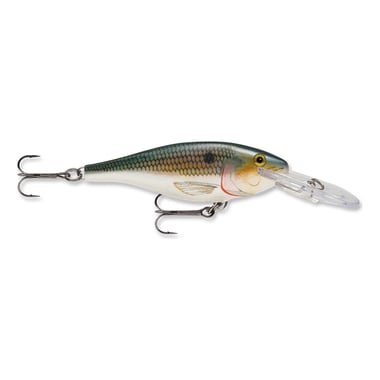
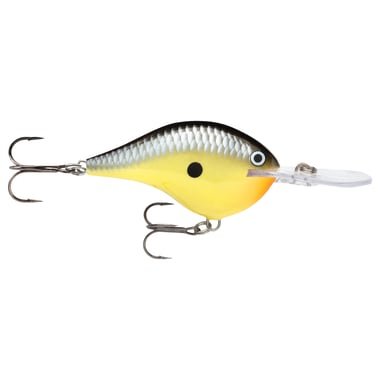
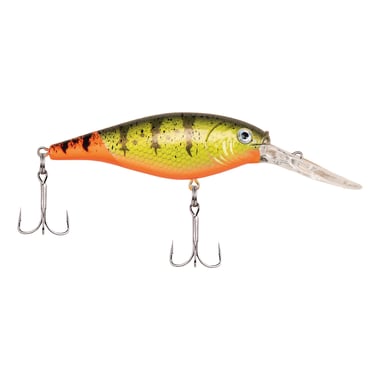
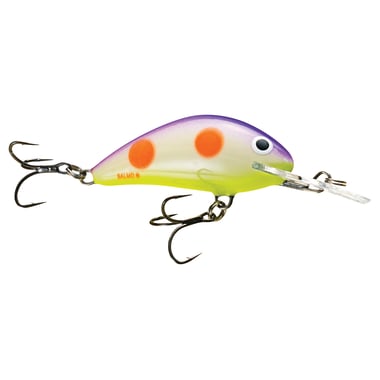
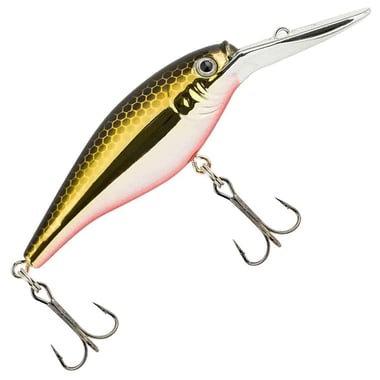
Crankbaits with the deepest color runs
The families carrying the most individual variants in the catalog. Breadth of stock, not a ranking of which one catches more fish.
What a web page cannot know
Everything above is true of crankbaits everywhere, in every month, for every angler. That is exactly the problem with it. Cobia answers the narrower question.
Those four lines need a location, a clock and your actual tackle box. No website has any of them.
Crankbaits questions people actually ask
A hard body with a plastic or metal bill on the nose. The bill drives the bait down and sets the wobble. Square bills deflect off wood and rock in shallow water. Medium divers work the two to eight foot range. Deep divers run ten to twenty and beyond with a long bill and a long cast. Lipless models are a separate thing entirely and have their own page.
Prespawn and fall are the big windows in freshwater, when fish set up on hard structure and are willing to chase. Inshore, a shallow crankbait bounced along an oyster bar does something almost nothing else does, which is to make an ugly noise against hard structure at exactly the right depth.
The bites come from deflection. Pick a bait that runs slightly deeper than the cover you are fishing so it is always in contact, then reel steadily and let it bang. When it hits something, keep reeling. Do not set the hook on the deflection.
Setting the hook. Load up and sweep. A crankbait fish hooks itself if you let it.
Know which crankbait to tie on
Scan your receipts, build your box once, and Cobia ranks what you already own against the water in front of you.
Android coming soon
iPhone, iOS 17 or later. Setup takes about a minute.