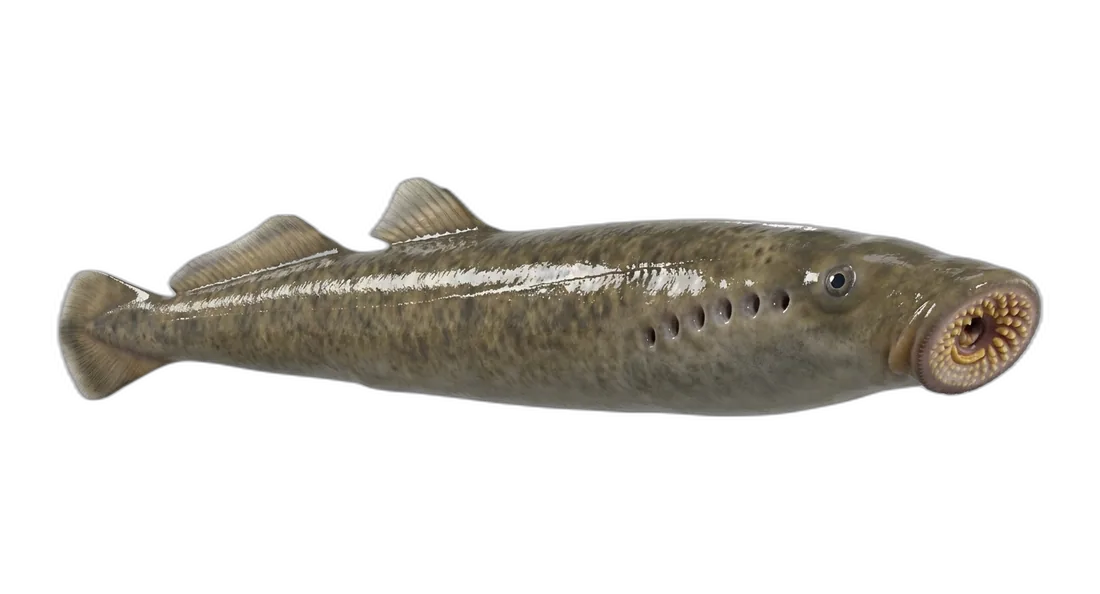
Sea Lamprey
Petromyzon marinus
Also called lamprey, great lakes lamprey
Sea lampreys are primitive, eel-like parasitic fish with circular sucker mouths lined with rows of teeth. They are not true fish but rather jawless vertebrates that attach to other fish to feed on their blood and bodily fluids.

Sea Lamprey at a glance
- Scientific name
- Petromyzon marinus
- Typical size
- 12-24 inches, 1-3 lbs
- Water
- Brackish
- Habitat
- Freshwater
- Rarity in the Fishdex™
- Uncommon
Habitat
Sea lampreys are anadromous, spending their adult lives in oceans and large lakes before returning to freshwater rivers and streams to spawn. They are not targeted by anglers and are considered a destructive invasive species in the Great Lakes. Adult lampreys die after spawning, and juvenile lampreys (ammocoetes) live buried in river sediments for several years before metamorphosing.
Catch one and it is yours
Log a sea lamprey through the Cobia Camera and this entry fills in with your photo, your personal best, and the exact conditions on the day. The app also carries the slot and season rules for wherever you are standing.
How the Fishdex™ worksSea Lamprey questions people ask
Sea Lamprey is Petromyzon marinus. Anglers also call it lamprey, great lakes lamprey.
A typical sea lamprey runs 12-24 inches, 1-3 lbs. Cobia records the length and weight of every sea lamprey you log and keeps your personal best on its Fishdex entry.
Sea lampreys are anadromous, spending their adult lives in oceans and large lakes before returning to freshwater rivers and streams to spawn. They are not targeted by anglers and are considered a destructive invasive species in the Great Lakes. Adult lampreys die after spawning, and juvenile lampreys (ammocoetes) live buried in river sediments for several years before metamorphosing. It is a water species, filed under freshwater in the Fishdex.
Yes. Log one through the Cobia Camera and this entry fills in with your own photo, your personal best, and the conditions on the day you caught it. The app also carries the slot limits and season dates for wherever you are standing. It is free.
Tomorrow morning starts tonight
Set your home water, pick a drive radius, and wake up to a plan.
Android coming soon
iPhone, iOS 17 or later. Setup takes about a minute.