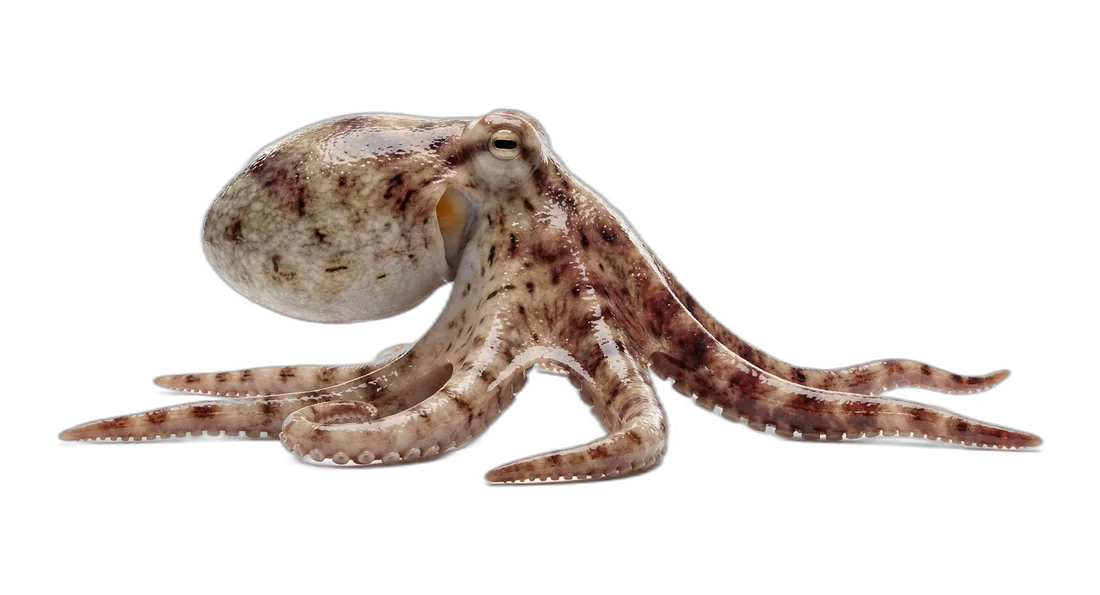
Common Octopus
Octopus vulgaris
The Common Octopus is a highly intelligent cephalopod mollusk with eight arms covered in suction cups and remarkable camouflage abilities. It is occasionally caught by anglers using bottom fishing techniques or found in crab traps.

Common Octopus at a glance
- Scientific name
- Octopus vulgaris
- Typical size
- 12-36 inches arm span, 6-22 lbs
- Water
- Saltwater
- Habitat
- Inshore
- Rarity in the Fishdex™
- Uncommon
Habitat
Common octopuses inhabit rocky reefs, coral formations, and sandy bottoms in coastal waters from the intertidal zone to depths of about 200 feet. Anglers typically encounter them while bottom fishing for other species or when they grab bait intended for fish. They are most active at night and often hide in crevices and caves during the day.
Catch one and it is yours
Log a common octopus through the Cobia Camera and this entry fills in with your photo, your personal best, and the exact conditions on the day. The app also carries the slot and season rules for wherever you are standing.
How the Fishdex™ worksCommon Octopus questions people ask
Common Octopus is Octopus vulgaris.
A typical common octopus runs 12-36 inches arm span, 6-22 lbs. Cobia records the length and weight of every common octopus you log and keeps your personal best on its Fishdex entry.
Common octopuses inhabit rocky reefs, coral formations, and sandy bottoms in coastal waters from the intertidal zone to depths of about 200 feet. Anglers typically encounter them while bottom fishing for other species or when they grab bait intended for fish. They are most active at night and often hide in crevices and caves during the day. It is a salt water species, filed under inshore in the Fishdex.
Yes. Log one through the Cobia Camera and this entry fills in with your own photo, your personal best, and the conditions on the day you caught it. The app also carries the slot limits and season dates for wherever you are standing. It is free.
Tomorrow morning starts tonight
Set your home water, pick a drive radius, and wake up to a plan.
Android coming soon
iPhone, iOS 17 or later. Setup takes about a minute.